


Georgieva Re-Elected As IMF Managing Director For Second Term


News
Fatgbems Group Takes Customer Appreciation To Retail Outlets Across Lagos, Ogun and Oyo To Mark Customer Service Week


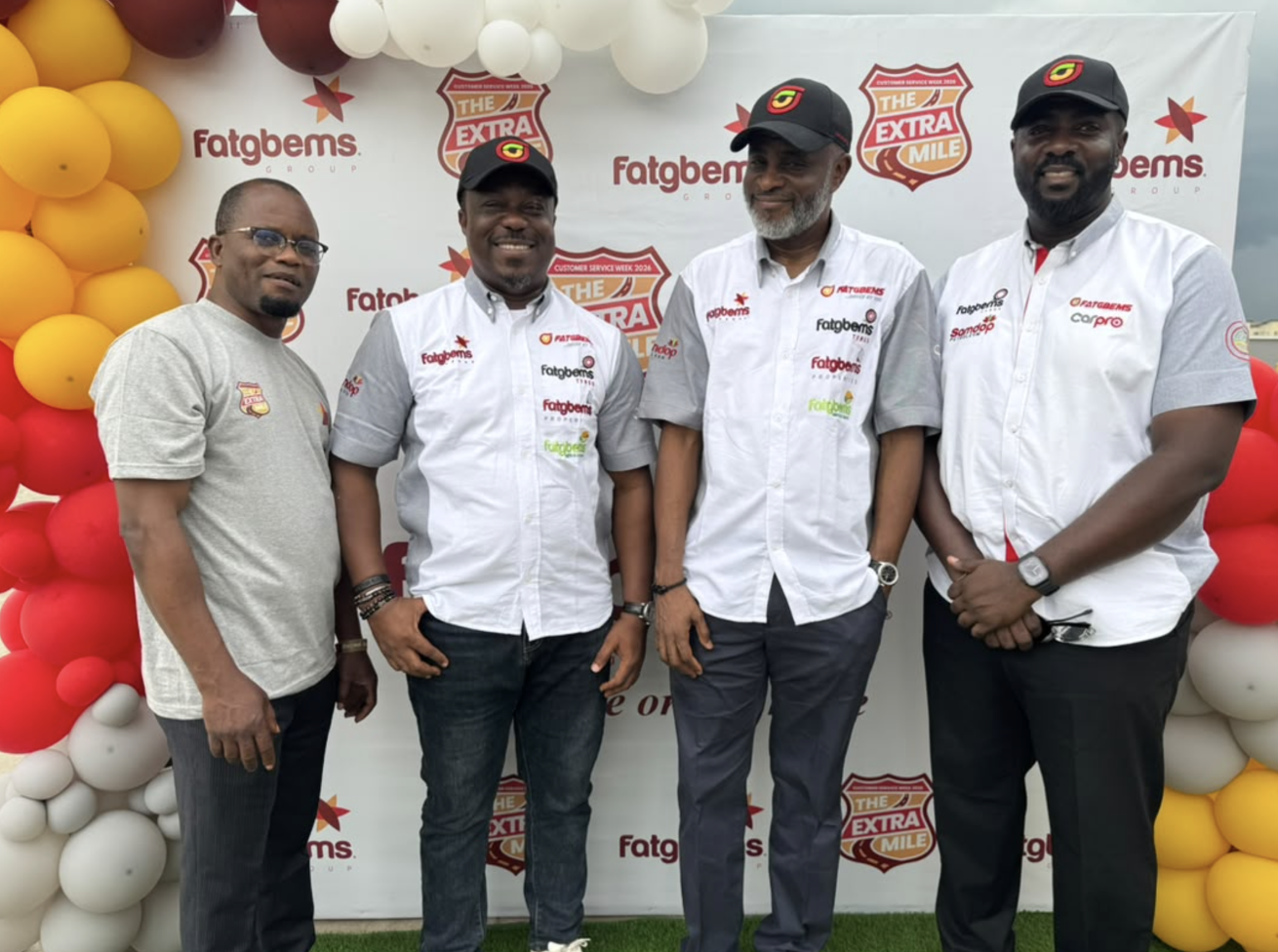
Fatgbems Group Takes Customer Appreciation To Retail Outlets Across Lagos, Ogun and Oyo To Mark Customer Service Week
Fatgbems Group has commenced its 2026 Customer Service Week with a strong commitment to going beyond expectations and creating memorable experiences for its customers, as the Group celebrates the week under the theme “The Extra Mile.”
The week-long celebration was officially kicked off on Monday, October 5, 2026, at the Fatgbems Opic Mega Station, bringing together the Group Managing Director/Chief Executive Officer, Director of Retail Business and Expansion, Executive Director, Operations and Technology, Executive Director, Wholesale Business, Chief Operating Officer, other members of the Senior Management Team and staff.


The opening ceremony provided an opportunity for the leadership team to appreciate employees for their commitment to delivering excellent customer experiences while reinforcing the importance of putting customers at the heart of every business decision.
The theme, “The Extra Mile,” reflects Fatgbems Group’s commitment to doing more than simply meeting customer expectations. It represents the Group’s determination to consistently deliver exceptional service, listen to customers, appreciate their loyalty and create positive experiences at every point of interaction.
Speaking at the commencement of the Customer Service Week, the Chief Operating Officer of Fatgbems Group, Mr. Ayodele Odulaja, said the celebration reflected the organisation’s belief that customer service is not merely a department or function, but a responsibility shared by everyone within the Group.
“At Fatgbems, we believe that customer service goes beyond providing a product or completing a transaction. It is about how we make our customers feel, how well we listen to them and the additional effort we are willing to make to meet and exceed their expectations.
“The theme, The Extra Mile, captures the spirit we want to see across Fatgbems. We want every member of our team to understand that sometimes it is the little extra effort, the smile, the timely response, the willingness to listen or the decision to solve a customer’s problem that makes all the difference.
“This week is therefore not just a celebration; it is a renewed commitment to our customers. We appreciate their loyalty and assure them that Fatgbems will continue to raise the bar in delivering excellent service.”
As part of the activities lined up for the celebration, Fatgbems customer-facing teams will embark on an engagement tour of selected retail outlets across Lagos, Ogun and Oyo States, bringing the Customer Service Week experience directly to customers.


A major highlight of the outlet engagement will be the “Spin and Win” customer interaction, designed to create excitement while rewarding customers for their patronage and loyalty to the Fatgbems brand.
Customers will have the opportunity to participate in the interactive game and win a range of exciting gifts, including fuel top-ups, branded flasks, umbrellas, blood pressure monitors and other gift items.
Speaking on his experience during the Customer Service Week engagement, one of Fatgbems’ customers, Mr. Usman Adeola, commended the initiative and described it as a welcome demonstration of the company’s appreciation for its customers.
“It is encouraging to see Fatgbems come out to interact directly with customers and appreciate us. Customer service is not only about selling fuel; it is also about how customers are treated and how the company makes us feel valued.
“The Spin and Win is a very interesting idea, and I believe initiatives like this will strengthen the relationship between Fatgbems and its customers. We appreciate the company for going the extra mile.”


The Customer Service Week activities will also provide an avenue for Fatgbems teams to interact directly with customers, receive feedback, understand their experiences and identify opportunities to further improve service delivery across its retail network.
The Group believes that sustainable business growth is closely linked to customer trust, satisfaction and loyalty. Consequently, Fatgbems continues to invest in initiatives that strengthen customer relationships while ensuring that its people, products and service channels consistently deliver on the brand promise.
The 2026 Customer Service Week celebration reinforces Fatgbems Group’s commitment to putting customers first, listening more, responding better and going the extra mile in delivering value.
About Fatgbems Group
Fatgbems Group is a diversified Nigerian business group with interests spanning key sectors of the economy. Through its businesses, the Group remains committed to delivering quality products and services while creating sustainable value for customers, employees, partners and other stakeholders.

Trending News
SHOCKING !! Oluyin Of Iyin-Ekiti In DSS Net Over Alleged Suspicious Demand for Governor’s Used Chair


SHOCKING !! Oluyin Of Iyin-Ekiti In DSS Net Over Alleged Suspicious Demand for Governor’s Used Chair
The Department of State Services (DSS) has invited the Oluyin of Iyin-Ekiti, Oba Adeniyi Adeola Ajakaiye, for questioning after he made a quiet but suspicious demand for the chair used by Ekiti State Governor, Biodun Oyebanji during a thanksgiving service at Babamuboni Memorial Anglican Church, Iyin-Ekiti.
According to leaked correspondences exchanged between Babamuboni Anglican Church and Oluyin’s Palace, Governor Oyebanji had attended an event on May 31, 2026 at the invitation of Senate Leader, Michael Opeyemi Bamidele, an indigene of Iyin-Ekiti few days to the state’s gubernatorial election.
How Oluyin of Iyin-Ekiti Strangely Demanded Governor’s Seat
It was gathered that after the church program, the Oluyin of Iyin Ekiti, Oba Ajakaiye quietly and specifically requested for the chair which the Governor sat on during the church program.
The church’s Vicar who suspected a mischief by the Oluyin’s palace politely declined the estranged and bizzare request.
According to the church, the decline made Oba Oluyin furious who immediately influenced the untimely transfer of the church’s vicar, Ven. Dr. Samuel Sunday Agunbiade from the church.
The Palace, in a letter addressed to the church , insisted that the governor’s seat be surrendered for “royal custody and appropriate traditional rites.”


In the said letter from the Oluyin-in-Council to the church, they strangely said that “the replacement chair to be commissioned henceforth shall be placed under strict and adequate guard at all times, to avert any future desecration or recurrence of such grave oversight against the sanctity of the stool.”
Meanwhile, the request which has been described as barbaric and bizarre in Nigeria’s political and religious history, immediately raised suspicion and outrage within the community.
The Position of the Anglican Church
The Anglican Church, in its formal reply, rejected the demand, stressing that church property is held in trust under ecclesiastical governance. It further explained that the chair no longer existed, having already been dismantled and incorporated into the altar furnishing.
According to the church, “Consequently, the Church is not at liberty to surrender, transfer, or remove dedicated Church property for external purposes outside the procedures prescribed by ecclesiastical authority.
“As custodians of these properties, we are duty-bound to preserve and administer them in accordance with the doctrine, discipline, and governance of the Church.”
REQUEST FOR THE REMOVAL OF THE CHURCH CHAIR TO THE PALACE nnnnn_040357
Despite the stance of the church to strictly adhere to its ecclesiastical responsibilities and constitutional obligations, the palace persisted.
Outrage in Iyin-Ekiti as Residents React
Residents of Iyin-Ekiti alleged that the monarch’s insistence was not cultural but sinister with claims that the chair might be for ritual manipulation against the governor whom at the time was preparing for his re-election.
They noted that the DSS invitation to the Oluyin underscores how seriously the security agency views the matter stressing that there are sinister motive behind the estranged act.
It was equally gathered that the fallout extended to the church leadership. Ven. Dr. Agunbiade, the vicar who stood firm against the palace’s demand, was transferred under circumstances widely perceived as punitive.
Residents noted that while governors, presidents, and dignitaries have attended church services across Nigeria and Ekiti State in particular for decades, never has a demand been made for their chairs to undergo “traditional rites.”
They described the incident as mischievous while calling for a thorough investigation by the DSS to unravel the mystery and sinister motives behind the bizzare request of the monarch.
-

 Trending News4 years ago
31 Pioneer Empowerment Project Trainees Graduate From Dominion Cares Foundation of RCCG Region 19
-

 News4 years ago
JUST IN: #Buhari Recalls Bashir Ahmad, Upgrades Him To Special Assistant
-

 News4 years ago
BREAKING: Femi #Otedola Endorses #Tinubu 2023 Presidential Bid [PHOTO]
-

 News4 years ago
#SuperTV Market Activation Train Storms Lagos Amidst Cheers from Lagosians
-

 Politics3 years ago
Upgrade Ikorodu General Hospital To Teaching Hospital, Oba Kabir Shotobi Urges Lagos Govt.
-

 Politics4 years ago
We’ve Interim Govt Proposal Ready, Chris Okotie Replies Yakasai, Critics
-

 News4 years ago
SuperTV Sets Abeokuta Agog With Exciting Consumer Activation [PHOTOS]
-

 Health & Wellbeing2 years ago
JUST IN: Federal Government Declares Free Cesarean Sections For All Nigerian Pregnant Women

