Connect with us
Nigeria's Public Debt Hits N152.4 Trillion

Nigeria’s Public Debt Hits N152.4 Trillion In The Month Of June 2025

More Videos

Published

on

Nigeria’s Public Debt Hits N152.4 Trillion In The Month Of June 2025—-Nigeria’s total public debt has climbed to N152.40 trillion as of June 30, 2025, up from N149.39 trillion at the end of March.

This is according to the latest figures from the Debt Management Office (DMO).

The figure represents a quarterly increase of N3.01 trillion, equivalent to 2.01%, while in dollar terms the debt stock rose from $97.24 billion to $99.66 billion, reflecting a 2.49% increase.

External debt portfolio sees modest rise

Nigeria’s external debt stood at $46.98 billion (N71.85 trillion) in June, up from $45.98 billion (N70.63 trillion) in March. The DMO report shows that multilateral lenders remain the largest creditors, with a combined exposure of $23.19 billion, accounting for 49.4% of external obligations. The World Bank, through the International Development Association, is the single largest creditor with $18.04 billion outstanding.

Bilateral loans made up $6.20 billion, led by the Export-Import Bank of China at $4.91 billion, followed by smaller exposures to France, Japan, India, and Germany. Commercial borrowings remained sizeable at $17.32 billion, almost entirely Eurobonds, which account for 36.9% of the external portfolio. A further $268.9 million was owed under syndicated facilities and commercial bank loans.

The reliance on Eurobonds and other commercial instruments exposes Nigeria to global market volatility, while the heavy concentration in multilateral loans indicates continued dependence on concessional financing.

Domestic debt dominated by long-term bonds
On the domestic side, total obligations reached N80.55 trillion by June, an increase of N1.79 trillion from N78.76 trillion in March. Federal Government bonds dominated the portfolio with N60.65 trillion, representing 79.2% of total domestic debt. This category included N36.52 trillion in naira-denominated bonds, N22.72 trillion in securitised Ways and Means advances, and N1.40 trillion in dollar bonds.

Treasury bills accounted for N12.76 trillion, or 16.7%, while Sukuk issues stood at N1.29 trillion. Smaller instruments included savings bonds worth N91.53 billion, green bonds of N62.36 billion, and promissory notes totalling N1.73 trillion. The promissory notes include both naira and foreign currency-denominated liabilities converted at the June CBN exchange rates.

The growing stock of securitised Ways and Means advances underlines the fiscal stress the government faces, even as it leans on bond markets to finance budget deficits.

Federal Government accounts for over 92%
Of the N152.40 trillion debt stock, the Federal Government was responsible for N141.08 trillion, which amounts to 92.6% of the total. This was made up of N64.49 trillion in external obligations and N76.59 trillion in domestic debt.

For the first time in 2025, the DMO provided a separate breakdown of external debt for states and the Federal Capital Territory. Their combined obligations were reported at $4.81 billion (N7.36 trillion), while their domestic debts stood at N3.96 trillion. In total, subnational governments owed N11.32 trillion, accounting for 7.4% of the national debt stock

What you should know
The DMO explained that external debt was converted to naira using the Central Bank’s official exchange rate of N1,529.21 to the dollar as of June 30, 2025. The weaker exchange rate compared with earlier in the year magnified the naira value of foreign borrowings, adding to the rise in the overall stock.

This effect highlights the vulnerability of Nigeria’s debt portfolio to currency depreciation. Even in periods where fresh borrowing is limited, the conversion of dollar and other foreign currency debts at weaker naira levels inflates the total.

Although Nigeria’s debt-to-GDP ratio remains within international thresholds, the pace of growth and the increasing cost of servicing loans continue to raise questions about sustainability.

Nigeria’s debt trajectory underscores the need for stronger revenue mobilisation and fiscal consolidation. Without significant progress in expanding the tax base and reducing expenditure inefficiencies, debt service could continue to crowd out investments in infrastructure and social spending.


Facebook 0 Twitter/X 0 LinkedIn0 WhatsApp0 0Shares

Sports

Jay Dasilva Goal Ends Coventry City’s 25-Year Wait for Premier League Victory

Published

on

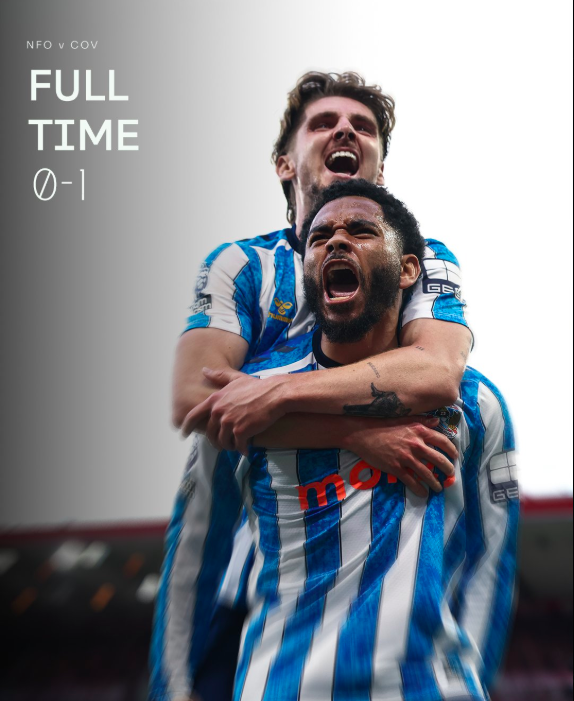
Jay Dasilva Goal Ends Coventry City’s 25-Year Wait for Premier League Victory—-Jay Dasilva struck in the second half as Frank Lampard’s Coventry City secured a historic 1-0 victory over Nottingham Forest to record their first Premier League win since April 2001.

Coventry City finally ended their 25-year wait for a Premier League victory after Jay Dasilva’s second-half strike secured a memorable 1-0 win over Nottingham Forest at the City Ground.

The victory marked Coventry’s first three points in the Premier League since April 2001, when they defeated Sunderland before suffering relegation at the end of that season. Their return to the top flight had begun with four consecutive defeats without scoring, making Saturday’s breakthrough particularly significant.

Frank Lampard’s side entered the encounter under pressure after a difficult start to life back in the Premier League. The newly promoted Sky Blues had lost to some of the division’s strongest sides, including Arsenal and Manchester City, before suffering a heavy 5-0 defeat against Brighton in their previous outing.

However, Coventry produced a disciplined performance against Forest and grew into the contest as the match progressed.

After a goalless first half, the breakthrough arrived in the 55th minute.

Goalkeeper Carl Rushworth launched a long delivery forward, which Dasilva controlled brilliantly before cutting inside and bending a composed finish beyond Nottingham Forest goalkeeper Matz Sels.

The goal ended Coventry’s wait for their first Premier League goal of the season and gave Lampard’s men something to protect for the remainder of the contest.

Forest pushed for an equaliser and came close when Igor Jesus produced an effort that was cleared off the line by Coventry defender Bobby Thomas.

The hosts eventually thought they had rescued a point in the 86th minute when Jesus found the net. However, the goal was reviewed by VAR after referee Jarred Gillett was sent to the pitchside monitor.

Gillett subsequently ruled that Jesus had fouled Coventry midfielder Caleb Yirenkyi in the build-up, cancelling the equaliser and allowing Coventry to retain their lead.

The decision sparked frustration among the home supporters, but Coventry held firm through the closing stages to secure a landmark victory.

The result brings an end to a remarkable wait for Coventry supporters. The club’s previous Premier League victory came more than 25 years ago, and the Sky Blues subsequently endured a turbulent period that included a spell in the fourth tier of English football.

For Lampard, the victory provides a major boost after four successive defeats at the beginning of Coventry’s top-flight campaign.

“It feels great, it feels amazing,” Lampard said after the match, praising his players for their work and resilience.

The victory also gave Coventry their first points and first goal of the Premier League season, lifting them from the bottom of the table.

Dasilva’s decisive strike will now be remembered as the goal that ended Coventry’s long wait for a Premier League victory and gave the club renewed belief as they continue their battle to establish themselves among England’s top-flight sides.

Facebook 0 Twitter/X 0 LinkedIn0 WhatsApp0 0Shares
Continue Reading

Sports

Falconets Face Colombia in U-20 World Cup Quarter-Final Showdown

Published

on

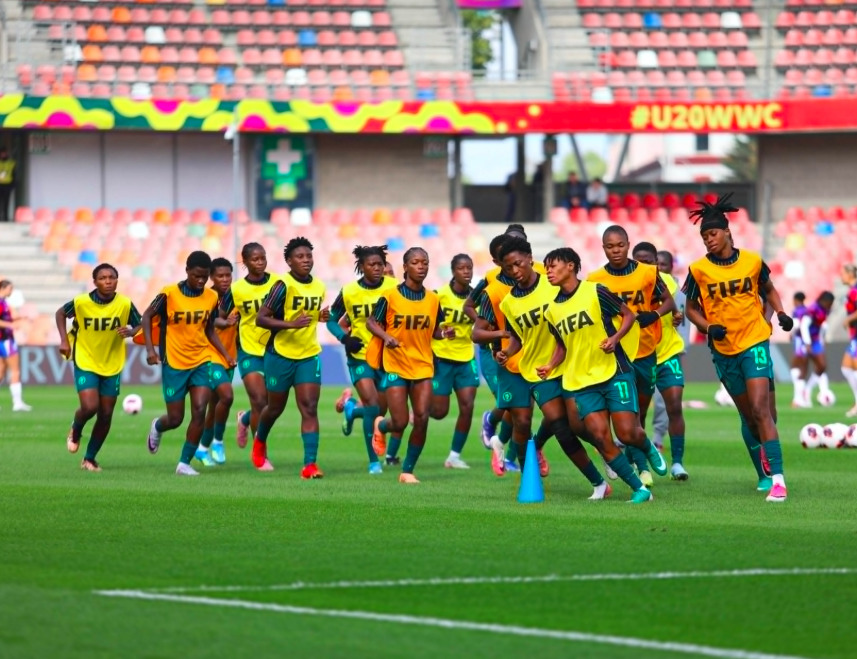
Falconets Face Colombia in U-20 World Cup Quarter-Final Showdown—-Nigeria’s Falconets will battle Colombia in Łódź as they chase a return to the FIFA U-20 Women’s World Cup semi-finals for the first time since 2014.

Nigeria’s Falconets will face Colombia on Sunday in a crucial quarter-final clash at the 2026 FIFA U-20 Women’s World Cup in Poland, with a place in the semi-finals at stake.

The encounter is scheduled for 3:00pm local time in Poland, 2:00pm Nigerian time, at the Stadion Miejski ŁKS in Łódź, according to FIFA’s official tournament schedule.

Nigeria reached the last eight after producing one of their strongest performances of the tournament, defeating England 3-0 in the Round of 16. Tosin Rafiu opened the scoring in the eighth minute before Seimeyeha Janet Akekoromowei doubled the advantage shortly after half-time. Mary Mamudu then completed the victory in the 73rd minute.

The result represented a major turnaround for the Falconets, who had endured a difficult start to the competition. Moses Aduku’s side lost 2-0 to Spain in their opening Group F fixture before drawing 0-0 with China.

Nigeria responded emphatically in their final group match, destroying New Caledonia 10-1 to secure second place in the group and progress to the knockout stage.

Colombia Stand in Nigeria’s Way

Colombia booked their quarter-final ticket by eliminating tournament hosts Poland with a 1-0 victory in the Round of 16.

The decisive moment came late in the match when a Polish own goal handed Colombia victory and sent them into the last eight. FIFA described Colombia as a resilient side capable of surviving pressure, making Sunday’s encounter a demanding test for Nigeria.

The match will be the first meeting between Nigeria and Colombia at the FIFA U-20 Women’s World Cup, although the two nations have crossed paths at youth level before.

Falconets Chase Historic Return

Nigeria are two-time runners-up at the U-20 Women’s World Cup, having reached the final in 2010 and 2014. Their last appearance in the semi-finals came in 2014, meaning victory over Colombia would take the Falconets back into the last four for the first time in 12 years.

The Falconets have also established themselves as one of the tournament’s most experienced teams, having featured at every edition since the competition began in 2002.

Coach Moses Aduku has urged his players to remain focused despite their impressive victory over England, stressing that the team must quickly move on from the Round of 16 triumph and concentrate on the next challenge.

A Place in the Semi-Finals Awaits

The winner of Nigeria and Colombia will advance to the semi-finals, where they will face the winner of the quarter-final between DPR Korea and Canada on September 23.

For the Falconets, the objective is clear: continue the momentum from their emphatic win over England, overcome Colombia and move one step closer to a first-ever FIFA U-20 Women’s World Cup title.

With the tournament now entering its decisive stage, Nigeria will hope their recent resurgence can carry them beyond the quarter-finals and back among the world’s final four.

Facebook 0 Twitter/X 0 LinkedIn0 WhatsApp0 0Shares
Continue Reading

Trending

Facebook 0 Twitter/X 0 LinkedIn0 WhatsApp0 0Shares