Connect with us

Published

on

ITS OFFICIAL!!! NAFDAC Orders Ban On Sachet Alcohol [DETAILS]


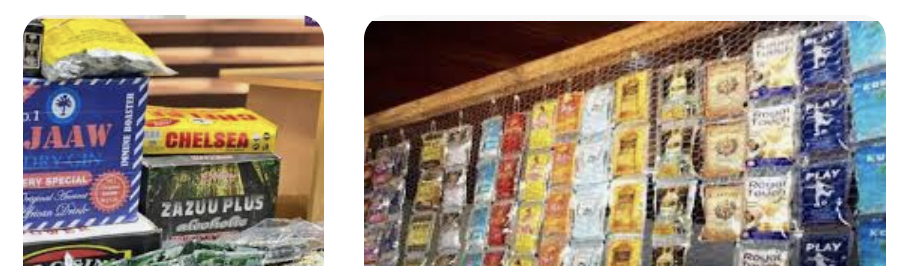
The National Agency of Food and Drug Administration and Control (NAFDAC) has directed a ban on the production and sale of alchoholic beverages packaged in sachets and small bottles below 200ml by December 2025.


NAFDAC Director General, Professor Mojisola Adeyeye gave the directive during a press briefing in Abuja.

“The proliferation of high-alcohol-content beverages in sachets and small containers has made such products easily accessible, affordable, and concealable, leading to widespread misuse and addiction among minors and commercial drivers,” Adeyeye said.

“This public health menace has been linked to increased incidences of domestic violence, road accidents, school dropouts, and social vices across communities.”

According to her, the directive follows a resolution by the Senate highlighting concerns over cheap alcohol drinks packaged in sachets being easily accessed by minors and contributing to social problems.

Adeyeye noted that the agency had earlier signed a Memorandum of Understanding with industry stakeholders to a phased ban with previous deadlines pushed from 2023 and now December 2025 .

She, however, noted that the Senate’s resolution is absolute and no further extension will be granted and urged retailers and manufacturers to comply with the directive.

Adeyeye reiterated that the ban is not punitive but. protective to safeguard the health and wellbeing of Nigerians.


She also explained that the agency will be collaborating with security agencies to ensure the full enforcement of the ban scheduled to begin in January 2026.

“This ban is not punitive; it is protective. It is aimed at safeguarding the health and future of our children and youth. The decision is rooted in scientific evidence and public health considerations. We cannot continue to sacrifice the well-being of Nigerians for short-term economic gain. The health of a nation is its true wealth,” she added.

See the press statement by NAFDAC’s boss below:

PRESS RELEASE BY DIRECTOR GENERAL, NATIONAL AGENCY FOR FOOD AND DRUG ADMINISTRATION AND CONTROL, PROF MOJISOLA CHRISTIANAH ADEYEYE
NAFDAC REAFFIRMS COMMITMENT TO ENFORCE THE BAN ON ALCOHOL IN SACHETS AND SMALL PLASTIC BOTTLES BY DECEMBER 2025


The National Agency for Food and Drug Administration and Control (NAFDAC) has reaffirmed its unwavering commitment to enforce the total ban on the production and sale of alcoholic beverages in sachets and small-volume PET/glass bottles (below 200ml) by December 2025, in line with the recent directive of the Senate of the Federal Republic of Nigeria.

This decisive action, ordered by the Nigerian Senate and backed by the Federal Ministry of Health and Social Welfare, underscores the Agency’s statutory mandate to safeguard public health and protect vulnerable populations—particularly children, adolescents, and young adults—from the harmful use of alcohol.

The proliferation of high-alcohol-content beverages in sachets and small containers has made such products easily accessible, affordable, and concealable, leading to widespread misuse and addiction among minors and commercial drivers.

This public health menace has been linked to increased incidences of domestic violence, road accidents, school dropouts, and social vices across communities.

In December 2018, NAFDAC, the Federal Ministry of Health, and the Federal Competition and Consumer Protection Commission (FCCPC) signed a five-year Memorandum of Understanding (MoU) with the Association of Food, Beverage and Tobacco Employers (AFBTE) and the Distillers and Blenders Association of Nigeria (DIBAN) to phase out sachet and small-volume alcohol packaging by January 31, 2024. The moratorium was later extended to December 2025 to allow industry operators to exhaust old stock and reconfigure production lines.

NAFDAC emphasizes that the current Senate resolution aligns with the spirit and letter of that agreement and with Nigeria’s commitment to the World Health Organization’s Global Strategy to Reduce the Harmful Use of Alcohol (WHA63.13, 2010), to which Nigeria is a signatory.

According to Prof. Mojisola Christianah Adeyeye, Director-General, NAFDAC:
“This ban is not punitive; it is protective. It is aimed at safeguarding the health and future of our children and youth. The decision is rooted in scientific evidence and public health considerations. We cannot continue to sacrifice the well-being of Nigerians for short-term economic gain. The health of a nation is its true wealth.”

NAFDAC reiterates that only two categories of alcoholic beverages are affected by this regulation—spirit drinks packaged in sachets and small-volume PET/glass bottles below 200ml. The Agency calls on all stakeholders, including manufacturers, distributors, and retailers, to comply fully with the phase-out deadline, as no further extension will be entertained beyond December 2025.

The Agency will continue to work collaboratively with the Federal Ministry of Health and Social Welfare, the Federal Competition and Consumer Protection Commission (FCCPC), and the National Orientation Agency (NOA) to implement nationwide sensitization campaigns on the health and social dangers associated with alcohol misuse.

NAFDAC remains resolute in its mission to ensure that only safe, wholesome, and properly regulated products are available to Nigerians.

Signed:
Prof Mojisola Christianah Adeyeye, FAS
Director-General
National Agency for Food and Drug Administration and Control (NAFDAC)
Abuja, Nigeria
Date:11th November 2025

0Shares
Continue Reading
Click to comment

Leave a Reply

News

Osun LG Funds: Court Orders Arrest of UBA Senior Executives Over Alleged Unauthorised Accounts

Published

on

Court Orders Arrest of UBA Senior Executives

Osun LG Funds: Court Orders Arrest of UBA Senior Executives Over Alleged Unauthorised Accounts—-An Osogbo Chief Magistrate Court has issued a bench warrant against United Bank for Africa (UBA) Plc and three of its senior executives over their alleged involvement in the opening and operation of unauthorised accounts used to manage local government funds in Osun State.

The court’s action follows allegations that the accounts were operated outside approved financial and administrative frameworks governing council finances.

The bench warrant was issued on Friday, January 30, 2026, following the failure of the bank and the affected executives to appear before the court in a case instituted by the Osun State Government through the Office of the Attorney General. The court subsequently adjourned further hearing in the matter to February 10, 2026.

The charges, filed under charge number MOS/601C/2025, stem from petitions by chairmen of local governments in the state, who alleged that unauthorised accounts were opened to receive and manage statutory allocations meant for the 30 local government councils in Osun State.

According to the prosecution, the accounts were allegedly opened and operated at UBA “to allow unauthorized persons to operate and maintain the accounts,” an action the state government said contravenes existing financial and administrative regulations governing local government funds.

Those listed in the charge alongside UBA Plc are the bank’s Group Managing Director, Mr. Oliver Alawuba; Group Legal Adviser, Mr. Billy Odura; and Deputy Managing Director, Mr. Chukwuma Nweke. The defendants are accused of allowing the opening and operation of what the state government described as “illegal accounts” for Osun State local governments.

The case is unfolding against the backdrop of a prolonged local government crisis in Osun State, following a disputed council election conducted at the tail end of the administration of former Governor Gboyega Oyetola. The election was later nullified by the Federal High Court sitting in Osogbo.

The Osun State Government has repeatedly maintained that the chairmen produced by the election, which was conducted under the All Progressives Congress (APC)-led administration, were sacked by the court and therefore lack legal standing to occupy council offices or exercise control over local government finances.

Reacting to the issuance of the bench warrant, the Commissioner for Information and Public Enlightenment, Oluomo Kolapo Alimi, said the matter “revolves around the control of local government funds.”

He stated that the Osun State Government’s position remains that the sacked APC chairmen “are not and should not in any way or manner lay claim to the legitimate occupation of all council areas in Osun State,” adding that the continued occupation of the councils by the opposition party was “illegitimate.”

Alimi expressed confidence in the judiciary, saying the government believes the court will “carry out its constitutionally assigned duties and responsibilities without fear or favour” as the case progresses.

The court subsequently fixed February 10, 2026, for further hearing in the matter, as legal proceedings continue over the control and administration of local government funds in the state.

The development marks a significant escalation in the ongoing political and legal dispute surrounding local government administration in Osun State.

On Wednesday, SaharaReporters reported that lawyers representing the All Progressives Congress (APC) failed to appear in court, prompting accusations by the state government that the opposition party is deliberately evading judicial scrutiny to prolong the local government crisis.

The suit, filed by the Osun State chapter of the APC at the Federal High Court in Osogbo, seeks judicial backing for what the party describes as a continuation of the tenure of its local government chairmen. However, when the matter came up for hearing on January 28, 2026, none of the party’s listed lawyers — including three Senior Advocates of Nigeria (SANs) — was present in court.

The court subsequently adjourned the case to March 4, 2026.

Reacting to the development, the Osun State Government described the absence of APC lawyers as an intentional act aimed at frustrating the resolution of the prolonged local government imbroglio.

In a statement issued by the Commissioner for Information and Public Enlightenment, Oluomo Kolapo Alimi, the government accused the APC of running away from a case it had filed and has been citing as justification for its continued occupation of council secretariats.

Alimi said the party’s conduct confirmed its alleged strategy of delay. He stated, “It is in the public domain that, in order to carry on with their illegality, they claimed they filed a case at the Federal High Court in Osogbo for tenure elongation but today they ran away from the same case.”

He further accused the APC of misrepresenting the nature of the suit, noting that the party had alternated between calling it a request for “tenure elongation” and “tenure determination,” which he described as “clearly bizarre.”

There is a dispute around over N130billion local government funds which the Bola Tinubu’s administration has continued to hold on to.

0Shares
Continue Reading

Economy

ECOWAS Bloc Achieves 4.6% Growth Amid Global Economic Headwinds – Dr Omar

Published

on

ECOWAS Bloc Achieves 4.6% Growth

ECOWAS Bloc Achieves 4.6% Growth Amid Global Economic HeadwindsDr Omar—-ECOWAS President, Dr Omar Touray, says the bloc recorded 4.6 per cent economic growth in 2025, in spite of global economic challenges, and envisages 5 per cent growth in 2026.

Touray disclosed this on Thursday in Abuja during a meeting with development partners, while highlighting the commission’s 2025 Annual Report.

He said that ECOWAS outperformed the continental average in 2025 through structural reforms, rising investment in mining and energy, improved regional trade facilitation, and a strong rebound in services, transport and tourism.

“This robust performance is driven by structural reforms, rising investment in mining and energy, improvement in regional trade facilitation and a strong rebound in services, transport and tourism,” he said.

According to him, inflation, though still elevated in some member states, has declined in others due to coordinated monetary policies and improved food supply conditions.

“Our fiscal deficits have narrowed significantly as governments strengthen revenue mobilisation and rationalise public expenditure,” Touray said.

“Our debt-to-GDP ratio has also declined modestly, reflecting strong nominal growth and improved macroeconomic management,” he said.

He noted that the sub-region’s external position remained sound, with a strengthened current account surplus, which is supported by high export earnings from oil, gold and bauxite.

“We are meeting at a time when the global economy is undergoing profound transformation.

“Geopolitical tensions, restructuring of supply chains and the rapid acceleration of digital and green transitions continue to reshape the global economic system,” he said.

He further noted that global growth slowed in 2025 and uncertainty remained high, even as inflation eased slightly, but said Africa had continued to demonstrate resilience.

“Yet in the midst of these global headwinds, Africa continues to demonstrate remarkable resilience.

“Growth is recovering, inflation is declining, and political stability has improved in a number of countries,” the commission’s president said.

Touray said that peace and security remained at the core of the bloc’s mandate, adding that ECOWAS intensified preventive diplomacy, mediation and democratic support across the region in 2025.

“Peace and security remain at the heart of our mandate, because insecurity in parts of the region remains a major concern,” he stressed.

He said that ECOWAS would continue to manage the implications of the withdrawal of its three Sahel State members Burkina Faso, Mali and Niger, while keeping channels open for constructive engagement.

Touray disclosed that the ECOWAS Committee of Chiefs of Defence Staff completed the rotation of the Standby Force and reinforced preparations for both the Standby Force and the 1,650 strong Counterterrorism Brigade.

He said progress was made in combating organised crime and terrorism, with ECOWAS formally taking over the West Africa Police Information System after 12 years under Interpol.

He, however, noted that the reduced cooperation with the Alliance of Sahel States owing to their exit had complicated counterterrorism efforts.

“While attacks declined slightly, fatalities increased due to the rising use of improvised explosive devices,” Touray said.

On governance, Touray said ECOWAS supported several member states, including Côte d’Ivoire, Guinea and Guinea-Bissau, in electoral preparations, transitions and reforms.

He said the bloc recorded steady progress in economic integration, including the launch of the second phase of the pre-movement and migration project and validation of the ECOWAS Visa Online approach.

“Seven of our member states are now implementing the ECOWAS National Biometric Identity Card, and the most recent one is the Federal Republic of Nigeria,” he said.

Touray said ECOWAS’ support for women and youth yielded results, with more than 1,300 small-scale cross-border traders and 50 women-led SMEs benefiting from capacity-building programmes, while digital skills training expanded opportunities for rural women.

According to him, the commission committed about 8 million dollars to humanitarian emergencies and disaster risk reduction, while drug rehabilitation services expanded to 10 centres across the region.

On regional infrastructure and energy, the commission’s president said ECOWAS mobilised over $42 million for regional road network preparatory studies and advanced preparations for the Praia–Dakar–Abidjan Corridor, supported by the African Development Bank.

He reaffirmed ECOWAS’ zero tolerance for unconstitutional changes of government.

“There is now zero tolerance for anti-constitutional behaviour in the region.

“ECOWAS stands for no coups, and we will continue to maintain that position,” he said.

On recent political developments in Guinea-Bissau, he called for a short transition led by an inclusive government with a limited mandate to undertake constitutional and electoral reforms.

Touray also announced that sanctions on the Republic of Guinea had been lifted following satisfactory elections in country.

“This is the first time since my arrival in ECOWAS that I am sitting in front of the Ambassador of Guinea in an ECOWAS meeting.

“Guinea has been welcomed back as a full-fledged member of ECOWAS,” he said.

While expressing satisfaction with developments in the sub-region, Touray said it was gratifying to note that the bloc remained on course, in spite of the formidable challenges it faced in 2025,.

“The progress outlined reflects the resilience, determination and unity of our community.

“The vision of a peaceful, prosperous and fully integrated West Africa remains within reach,” he added.(NAN)
0Shares
Continue Reading

Trending

0Shares