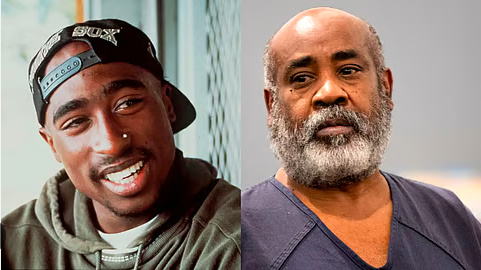
Ex-Gang Leader Duane ‘Keffe D’ Davis Goes on Trial Over 1996 Tupac Shakur Murder—-Nearly 30 years after Tupac Shakur was killed in a Las Vegas drive-by shooting, Duane “Keffe D” Davis faces trial in the only criminal case brought in connection with the rap icon’s death.
Nearly three decades after Tupac Shakur was fatally shot in Las Vegas, the long-running mystery surrounding the rapper’s death is finally heading into a courtroom as former gang leader Duane “Keffe D” Davis goes on trial Monday.
Davis, 63, is charged with murder with a deadly weapon with the intent to promote, further or assist a criminal gang. He has pleaded not guilty. Jury selection is scheduled to begin in Clark County District Court, with the trial expected to last several weeks.
Prosecutors accuse Davis of helping orchestrate the September 1996 attack that killed Shakur. Authorities allege that Davis was involved in planning the retaliation after an earlier confrontation involving members of his South Side Compton Crips gang and Shakur’s entourage.
Davis has never been accused of personally pulling the trigger. Prosecutors instead contend that he helped organize the attack and supplied the firearm allegedly used in the shooting. The identity of the person who fired the fatal shots remains a central issue in the case.
Shakur was only 25 when he was shot while riding in a BMW driven by Death Row Records co-founder Marion “Suge” Knight following a Mike Tyson boxing match in Las Vegas on September 7, 1996. He died six days later from his injuries.
For years, the investigation produced no criminal charges. The case was revived after Davis made public comments about his alleged involvement, including accounts contained in his 2019 memoir, “Compton Street Legend,” as well as interviews and documentary appearances.
Those statements are expected to form a major part of the prosecution’s case. Prosecutors have acknowledged that Davis’ various accounts contain inconsistencies but argue that his statements nevertheless provide evidence of his role in the killing.
The defense, meanwhile, is expected to challenge the credibility and reliability of those statements. Davis’ lawyers have argued that portions of his memoir and other public accounts were exaggerated or inaccurate, setting up a trial in which the jury may have to determine which parts of Davis’ numerous accounts can be trusted.
The case also brings renewed attention to the bitter East Coast-West Coast rivalry that surrounded the hip-hop industry during the 1990s. Shakur was closely associated with Death Row Records, while the rivalry with Bad Boy Records and figures connected to the East Coast had become increasingly hostile.
Davis was arrested in September 2023 after investigators obtained a new indictment in the case, making him the only person ever charged in connection with Shakur’s murder. He has remained in custody since then.
The trial has attracted enormous public interest because of Shakur’s enduring influence on music and popular culture. The rapper sold tens of millions of records during his career and remains one of hip-hop’s most influential figures nearly three decades after his death.
Shakur’s family and supporters have spent years seeking answers over what happened that night in Las Vegas. The proceedings now offer prosecutors their first opportunity to present a complete criminal case before a jury.
However, the trial is not expected to resolve every unanswered question surrounding the murder. With the alleged gunman never charged and key witnesses from the 1996 era no longer available, prosecutors face the challenge of proving beyond a reasonable doubt that Davis was criminally responsible for the killing.
As jury selection begins Monday, the case enters a historic new chapter — nearly 30 years after one of hip-hop’s most enduring mysteries began.









 Trending News4 years ago
 News4 years ago
 News4 years ago
 News4 years ago
 Politics3 years ago
 Politics4 years ago
 News4 years ago
 Health & Wellbeing2 years ago
