Connect with us
New NMA President

Meet The New NMA President, Bala Audu

More Videos

Published

on

Meet The New NMA President, Bala Audu—-Bala Audu a Nigerian medical expert, has emerged as the new President of the Nigerian Medical Association (NMA). He is an astute scholar who has contributed immensely to the field of medicine through research initiatives, trainings and seminars.

He was elected at the annual delegates conference held in Calabar, the Cross River State capital in May 2024.

In this piece, Platinumpostng.com chronicles some interesting things about Bala Audu for you to read.

Audu is from the Hausa tribe in northern Nigeria.

Audu graduated in Medicine from the University of Maiduguri in 1988. He obtained a Masters degree from the University of London in 1994 and became a Fellow in Obstetrics and Gynecology in 1997.

He also obtained a Certificate in Hospital Management and Health Services from the National Institute of Public Health, Japan in 2008.

Audu worked at the University of Maiduguri Teaching Hospital until he was appointed Dean of the Faculty of Medical Sciences, Abubakar Tafawa Balewa University, Bauchi in 2017.

Audu was later appointed Vice-Chancellor of the Federal University of Health Sciences, Azare, Bauchi State.

He is an expert in gynecology oncology/infertility and serves as founding president of COSON and TAGCREC.

Audu is a member of professional bodies including; Nigerian Medical Association (NMA), Society of Gynecologists and Obstetricians in Nigeria (SOGON), Gynecology Oncology Society of Nigeria (GOSON), International Gynecological Cancer Society (ICGS), European Society of Gynecological Oncology (ESGO), European Society of Human Reproduction and Embryology (ESHRE), American Society of Reproductive Medicine (ASRM) and International Society for the Study of Hypertension in Pregnancy (ISSHP).

Audu holds a multimillion-dollar CZI research grant from the University of Miami to study single-cell networks of African ancestry and has authored more than 100 books.

Facebook 0 Twitter/X 0 LinkedIn0 WhatsApp0 0Shares
Continue Reading
Click to comment

Leave a ReplyCancel reply

News

EL-Lab Medical Diagnostics And Research Centre Secures ReAccreditation To ISO 15189:2022

Published

on

EL-Lab Medical Diagnostics And Research Centre Secures ReAccreditation To ISO 15189:2022


EL-Lab, a leading Medical diagnostic centre in Lagos earns renewed Accreditation from the Nigeria National Accreditation System (NiNAS), affirming its continued technical competence in medical laboratory testing.


A medical diagnostic centre with branches across Lagos, EL-Lab is the First Indigenous medical laboratory in Nigeria to attain the ISO 15189 status in Nigeria ten years ago. Till date, Nigeria may have less than 50 medical laboratories in both public and private categories to meet this standard.


EL-LAB has maintained this accreditation status for ten (10) years and currently holds this qualification from two (2) accreditation bodies in Nigeria, namely Medical Laboratory Council of Nigeria (MLSCN) and Nigeria National Accreditation System (NiNAS)


This achievement of reaccreditation and transition to ISO 15189:2022 for Medical testing, following a rigorous reassessment by Nigeria National Accreditation System (NiNAS) confirms that EL-Lab continues to meet the requirements of ISO 15189:2022, the internationally recognised standard governing quality and competence in medical laboratories. It sets out requirements covering everything from sample handling and testing procedures to staff competence and quality management, giving patients, clinicians, and partner institutions confidence in the accuracy and reliability of results.


For a medical diagnostic laboratory, reaccreditation is no small feat. It requires laboratories to demonstrate, through an independent and thorough assessment, that its systems, processes, and personnel consistently deliver results in line with international best practice. NiNAS, as Nigeria’s national accreditation body, conducts these assessments to ensure that accredited laboratories maintain the standards necessary for both local and global recognition.


By retaining this accreditation, EL Lab reinforces its position as a trusted provider of medical testing services within Lagos and the broader Nigerian healthcare system.


Speaking on this, the Managing Director of EL-Lab, Dr Elochukwu Adibo mni said; “This achievement reflects the laboratory’s commitment to quality assurance, staff training, and process improvement, factors that lead to more reliable outcomes for patients and referring clinicians”.


For more information about EL-Lab Medical Diagnostics, visit their website:  https://el-lab.org/


Facebook 0 Twitter/X 0 LinkedIn0 WhatsApp0 0Shares
Continue Reading

News

Sri Lanka on Alert as Nipah Virus Cases Emerge in Eastern India

Published

on

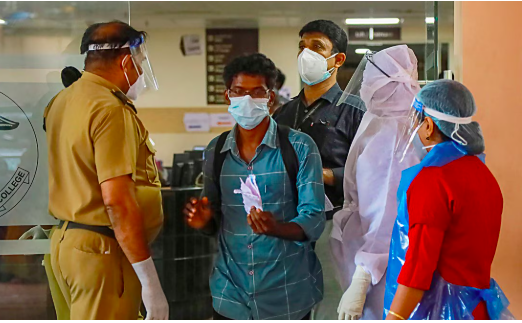
Sri Lanka on Alert as Nipah Virus Cases Emerge in Eastern India—-Sri Lanka has stepped up monitoring measures following reports of a Nipah virus cluster in India’s eastern state of West Bengal.

Health authorities across parts of Asia have also heightened vigilance over the emerging situation, the Daily Mirror reported.

Health officials said Sri Lanka is tracking developments at the regional level and remains in contact with international health monitoring systems.

While no cases have been reported locally, authorities have indicated that preparedness measures are in place should the situation evolve.

The alert follows confirmation by Indian authorities of at least five Nipah virus infections in West Bengal, including cases among healthcare workers.

The development has prompted several countries in the region to strengthen preventive measures, particularly at international airports.

Nipah virus is a zoonotic disease transmitted between animals and humans and, in some instances, through human-to-human contact.

It is classified as a priority pathogen by the World Health Organisation due to its epidemic potential and the severity of illness it can cause. Past outbreaks of the Nipah virus have been associated with high fatality rates, ranging from 40 per cent to 75 per cent. (Xinhua/NAN)

Facebook 0 Twitter/X 0 LinkedIn0 WhatsApp0 0Shares
Continue Reading

Trending

Facebook 0 Twitter/X 0 LinkedIn0 WhatsApp0 0Shares