Connect with us
Yahaya Bello

N80bn Fraud: Yahaya Bello’s Actions Sending Wrong Signals To Investors, Youths- CSOs

More Videos

Published

on

N80bn Fraud: Yahaya Bello’s Actions Sending Wrong Signals To Investors, YouthsCSOs—-Concerned by the number of court summons and arrest warrants by the Economic and Financial Crimes Commission (EFCC) to compel Kogi State former governor, Yahaya Bello, to respond to allegations against him, Civil Society Groups have described the former governor’s decision to continuously boycott the court as wrong signals to investors and youths that the constitution is ineffective.

They argued that this behaviour not only sets a dangerous precedent but also sends a disheartening message to investors and Nigerians especially the youths on the integrity of law and order, as well as, leadership.

According to them, boycotting courts undermines the fight against corruption, threatens the integrity of essential institutions, and further alienates the public from their leaders.

The human rights activists raised concerns on Thursday hours after the Federal High Court in Abuja issued a public summon on the former governor and mandated the EFCC to paste the order on the last address linked to Bello, No. 4 Bengazi Street, Maitama Abuja.

One of the organisations, the Centre for Social and Economic Rights (CSER), stated that the efforts by the anti-graft agency to bring the Kogi former governor before the court as stipulated by law were legitimate and should be commended.

The Executive Director of the centre, Nelson Ekujumi, meanwhile, described the former governor’s boycott as a sad development for the country’s democracy.

Ekujumi noted that the public, particularly the youths, could begin to see his boycott of court order and adoption of different tactics to evade arrest as an idealogy that could be adopted when they assume leadership positions.

He said: “It’s a sad development for our democracy that someone who once held public office in trust with the oath of the constitution can be brazenly defying the constitution by refusing to answer questions to the constitution on his account of stewardship in public office.

“The message the refusal of former Governor Yahaya Bello is sending to our youths is that leadership is a position for people to be lawless, that it’s not a position of responsibility, civility, and respect for the laws and customs of the land, it’s very unfortunate, reprehensible, condemnable and unacceptable”.

A young human rights activist, Emeka Onwuka, noted that the former governor’s action raises serious concerns about transparency, accountability, and the rule of law in promising investors zero tolerance against corruption.

According to him, the EFCC has been a crucial institution in Nigeria’s fight against corruption, working to investigate financial crimes and hold public officials accountable.

He argued that Bello’s actions, which appear to undermine this institution, reflect a troubling trend where powerful political figures allegedly sidestep legal scrutiny.

“Nonetheless, Bello’s avoidance tactics can be seen as part of a broader pattern among politicians who perceive themselves as above the law.

“Such actions erode public trust in government institutions and fuel the cynicism that many citizens feel towards their leaders. In a democracy, elected officials are meant to serve the public and uphold the law, not manipulate it to their advantage. By attempting to bypass EFCC arrangements, Bello risks normalizing a culture of impunity, where those in power evade accountability with relative ease.

“Moreover, this situation highlights the inherent challenges the EFCC faces in executing its mandate.

“The commission is tasked with rooting out corruption, but when political figures actively resist its efforts, it raises questions about the agency’s efficacy and autonomy. Are the very institutions designed to safeguard democracy being weakened by the actions of those who should be upholding the law? If influential figures like Bello can avoid legal scrutiny, what hope is there for smaller offenders?

“This vicious cycle can lead to a decrease in reported financial crimes and, ultimately, a decline in the public’s faith in Nigeria’s justice system”.


Facebook 0 Twitter/X 0 LinkedIn0 WhatsApp0 0Shares

Crime

Ex-Gang Leader Duane ‘Keffe D’ Davis Goes on Trial Over 1996 Tupac Shakur Murder

Published

on

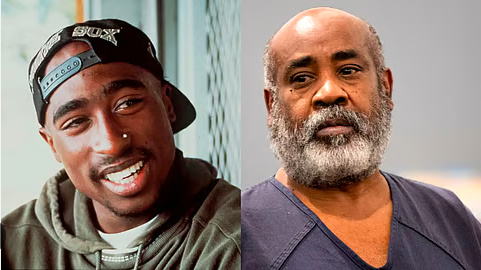
Ex-Gang Leader Duane ‘Keffe D’ Davis Goes on Trial Over 1996 Tupac Shakur Murder—-Nearly 30 years after Tupac Shakur was killed in a Las Vegas drive-by shooting, Duane “Keffe D” Davis faces trial in the only criminal case brought in connection with the rap icon’s death.

Nearly three decades after Tupac Shakur was fatally shot in Las Vegas, the long-running mystery surrounding the rapper’s death is finally heading into a courtroom as former gang leader Duane “Keffe D” Davis goes on trial Monday.

Davis, 63, is charged with murder with a deadly weapon with the intent to promote, further or assist a criminal gang. He has pleaded not guilty. Jury selection is scheduled to begin in Clark County District Court, with the trial expected to last several weeks.

Prosecutors accuse Davis of helping orchestrate the September 1996 attack that killed Shakur. Authorities allege that Davis was involved in planning the retaliation after an earlier confrontation involving members of his South Side Compton Crips gang and Shakur’s entourage.

Davis has never been accused of personally pulling the trigger. Prosecutors instead contend that he helped organize the attack and supplied the firearm allegedly used in the shooting. The identity of the person who fired the fatal shots remains a central issue in the case.

Shakur was only 25 when he was shot while riding in a BMW driven by Death Row Records co-founder Marion “Suge” Knight following a Mike Tyson boxing match in Las Vegas on September 7, 1996. He died six days later from his injuries.

For years, the investigation produced no criminal charges. The case was revived after Davis made public comments about his alleged involvement, including accounts contained in his 2019 memoir, “Compton Street Legend,” as well as interviews and documentary appearances.

Those statements are expected to form a major part of the prosecution’s case. Prosecutors have acknowledged that Davis’ various accounts contain inconsistencies but argue that his statements nevertheless provide evidence of his role in the killing.

The defense, meanwhile, is expected to challenge the credibility and reliability of those statements. Davis’ lawyers have argued that portions of his memoir and other public accounts were exaggerated or inaccurate, setting up a trial in which the jury may have to determine which parts of Davis’ numerous accounts can be trusted.

The case also brings renewed attention to the bitter East Coast-West Coast rivalry that surrounded the hip-hop industry during the 1990s. Shakur was closely associated with Death Row Records, while the rivalry with Bad Boy Records and figures connected to the East Coast had become increasingly hostile.

Davis was arrested in September 2023 after investigators obtained a new indictment in the case, making him the only person ever charged in connection with Shakur’s murder. He has remained in custody since then.

The trial has attracted enormous public interest because of Shakur’s enduring influence on music and popular culture. The rapper sold tens of millions of records during his career and remains one of hip-hop’s most influential figures nearly three decades after his death.

Shakur’s family and supporters have spent years seeking answers over what happened that night in Las Vegas. The proceedings now offer prosecutors their first opportunity to present a complete criminal case before a jury.

However, the trial is not expected to resolve every unanswered question surrounding the murder. With the alleged gunman never charged and key witnesses from the 1996 era no longer available, prosecutors face the challenge of proving beyond a reasonable doubt that Davis was criminally responsible for the killing.

As jury selection begins Monday, the case enters a historic new chapter — nearly 30 years after one of hip-hop’s most enduring mysteries began.

Facebook 0 Twitter/X 0 LinkedIn0 WhatsApp0 0Shares
Continue Reading

Breaking

JUST IN: Seyi Makinde Receives Surveillance Aircraft to Strengthen State Security, Enhance Crime-Fighting Operations

Published

on

JUST IN: Seyi Makinde Receives Surveillance Aircraft to Strengthen State Security, Enhance Crime-Fighting Operations—-Governor Seyi Makinde says the advanced intelligence aircraft will strengthen security operations, enhance aerial surveillance and improve the fight against kidnapping, banditry and other crimes across Oyo State.

Oyo State Governor Seyi Makinde has officially taken delivery of the state’s long-awaited surveillance aircraft, describing the acquisition as a major milestone in his administration’s efforts to strengthen security and protect lives and property across the state.

The aircraft, a Diamond DA42 MNG Intelligence, Surveillance and Reconnaissance (ISR) platform, arrived after months of manufacturing and assembly, with the governor saying it would significantly enhance intelligence gathering and provide real-time aerial support for security agencies operating across Oyo’s vast terrain.

According to the state government, the surveillance aircraft is equipped with advanced imaging and reconnaissance technology capable of monitoring forests, border communities, mining sites and other remote locations frequently exploited by kidnappers, bandits and other criminal elements. Officials said the platform will complement ground operations by providing security agencies with actionable intelligence and improving rapid response capabilities.

Makinde noted that the aircraft forms part of a broader strategy to modernise Oyo State’s security architecture through technology-driven policing and closer collaboration with the Nigerian Air Force, Amotekun Corps and other security agencies. He explained that intelligence gathered from aerial surveillance would enable security operatives to track criminal movements more effectively and coordinate operations across difficult terrain.

The governor also revealed that the aircraft will play a critical role in monitoring the state’s borders with neighbouring states and the Republic of Benin, areas authorities have identified as vulnerable routes for criminal activities. Beyond security operations, the aircraft is expected to support disaster response, environmental monitoring and emergency management when required.

The acquisition comes amid heightened security concerns in Oyo State following recent incidents of kidnapping, including the abduction of pupils and teachers in Oriire Local Government Area. Makinde previously expressed regret that the surveillance aircraft was not operational during the rescue mission but said its deployment would greatly enhance future operations against criminal groups.

State officials disclosed that Oyo invested about ₦7.76 billion in procuring the surveillance aircraft as part of its long-term security strategy. The government believes the investment will improve intelligence-led policing, strengthen inter-agency cooperation and reinforce public confidence in efforts to tackle insecurity across the state.

Governor Makinde reaffirmed his administration’s commitment to deploying modern technology in safeguarding residents, stressing that security remains a top priority. He added that the aircraft would become fully operational immediately after final integration and testing, marking a new chapter in Oyo State’s fight against crime and insecurity.

Facebook 0 Twitter/X 0 LinkedIn0 WhatsApp0 0Shares
Continue Reading

Trending

Facebook 0 Twitter/X 0 LinkedIn0 WhatsApp0 0Shares