Connect with us

Published

on

WHD: Africa Records Decrease In Maternal Mortality Deaths, Others—-The World Health Organisation (WHO) says Africa has made significant progress in ensuring better health outcomes for its people over the past decade.

Dr Matshidiso Moeti, WHO Regional Director for Africa, made this known  in a statement to mark the World Health Day (WHD) which is celebrated every year on April 7.

The  theme of the 2024 WHD is:  ‘My Health, My Right ‘

Moeti , therefore, urged UN Member States to uphold the progress made towards fulfilling the right to health for all as agreed by nations in 1948 and enshrined in the WHO Constitution.

She said that more mothers and children are surviving today than before.

“From 2000 to 2020, the life expectancy of African women increased from 54 to 67 years; the maternal mortality ratio decreased by 33 per cent from 788 to 531 maternal deaths per 100 000 lives.

“The number of children dying before the age of five was reduced by 50 per cent from 2000 to 2017.

“Between 2011 and 2021, the number of new HIV infections and AIDS-related deaths decreased by 44 per cent and 55 per cent, respectively, across Africa, and the number of TB deaths decreased by 26 per cent,” Moeti said.

According to her, several diseases are on the verge of eradication and elimination, including polio, guinea worm disease, as well as maternal and neonatal tetanus.

“I also applaud our Member States’ efforts to accelerate progress towards Universal Health Coverage (UHC).

” They are reforming their health policies and revamping legislative and regulatory frameworks, including National Health Insurance Schemes (NHIS) and Social Health Insurance (SHI) schemes to reduce catastrophic out-of-pocket health expenditures,” she said.

According to her, several countries have started operationalising an integrated Life Stages Approach, which prioritises the health of individuals at every stage of their life and the care needed at any time.

“Health is not only a fundamental human right, but also central to peace and prosperity.

” Thus, addressing health inequities requires intentional efforts.

“Considerations of vulnerable groups must be assessed. Their needs ought to be purposively integrated into health programmes at all levels to accelerate progress toward UHC.

“We know that many in our region still need help with access to quality essential health services due largely to unfulfilled rights,” Moeti said.

She said it was further compounded by protracted and ongoing crises such as conflicts, climate change, food insecurity, disease outbreaks, and epidemics.

Moeti said that the number of people aged 15 and more living with HIV was still high at an estimated 24.3 million in 2021, 3.4 per cent of the total population compared to 15.6 million in 2005.

According to her, it reflects the continued transmission of HIV despite reductions in the incidence of people newly infected and the benefits of significantly expanded access to antiretrovirals.

“Disparities in the coverage of key reproductive, maternal, newborn, child, and adolescent health interventions remain significant, with the rural dweller, the poor, and those in hard-to-reach areas being the most disadvantaged.

” Furthermore, about 8 per cent of the population in the African Region is still experiencing catastrophic health expenditures,” she said.

NAN reports that in 1948, the WHO held the first WHD.

The WHD is held to mark WHO’s founding and is seen as an opportunity by the orgaisation to draw worldwide attention to a subject of major importance to global health each year

0Shares
Continue Reading
Click to comment

Leave a Reply

News

Sri Lanka on Alert as Nipah Virus Cases Emerge in Eastern India

Published

on

Nipah Virus Cases Emerge in Eastern India

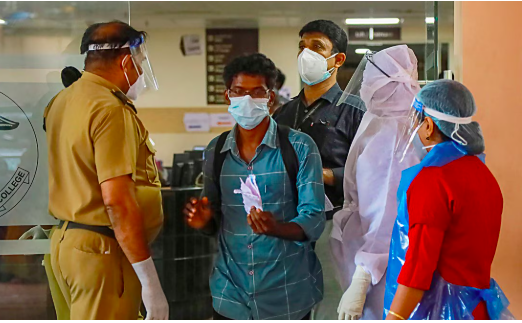
Sri Lanka on Alert as Nipah Virus Cases Emerge in Eastern India—-Sri Lanka has stepped up monitoring measures following reports of a Nipah virus cluster in India’s eastern state of West Bengal.

Health authorities across parts of Asia have also heightened vigilance over the emerging situation, the Daily Mirror reported.

Health officials said Sri Lanka is tracking developments at the regional level and remains in contact with international health monitoring systems.

While no cases have been reported locally, authorities have indicated that preparedness measures are in place should the situation evolve.

The alert follows confirmation by Indian authorities of at least five Nipah virus infections in West Bengal, including cases among healthcare workers.

The development has prompted several countries in the region to strengthen preventive measures, particularly at international airports.

Nipah virus is a zoonotic disease transmitted between animals and humans and, in some instances, through human-to-human contact.

It is classified as a priority pathogen by the World Health Organisation due to its epidemic potential and the severity of illness it can cause. Past outbreaks of the Nipah virus have been associated with high fatality rates, ranging from 40 per cent to 75 per cent. (Xinhua/NAN)

0Shares
Continue Reading

Health & Wellbeing

EL-LAB Limited Marks 2025 World Quality Week With innovation

Published

on

EL-LAB Limited Marks 2025 World Quality Week With innovation

EL-LAB Limited Marks 2025 World Quality Week With innovation


EL-LAB Medical Diagnostics and Research Centre, Nigeria’s leading ISO-certified diagnostic centre, today announced its dedication to global quality standards, marking World Quality Week 2025 with the theme “Quality: Think differently” and highlighting its ISO 15189:2022 accreditation.

The centre, which was established in 1998 (27 years ago), has provided advanced medical testing services across Lagos State and continues to contribute significantly to the development of the Nigerian health sector.

Quality: The Silent Foundation of Clinical Decisions

In a statement issued by the company, Mrs. Blessing Nwakobi, Quality Assurance Manager, emphasized that Quality Assurance is the cornerstone of reliable medical diagnosis.

“In healthcare, laboratories are the silent foundation of clinical decisions. Most medical diagnoses rely on accurate laboratory results, thereby making Quality Assurance fundamental to patient safety and clinical excellence,” Mrs. Nwakobi stated

Through the successful transition to the ISO 15189:2022 standard—the highest international benchmark for medical laboratories—EL-LAB demonstrates its unwavering commitment to excellence, impartiality, and safety. This accreditation ensures that the centre’s quality management system is not merely compliant, but a living culture of competence and continual improvement.

The system is strategically built on principles including:

Patient Centred Services
Risk-Based Thinking
Continuous Improvement

·       Staff engagement, Competence and Training

This risk-based approach ensures that all activities which pose a risk to patients are managed proactively, assuring the best possible outcomes across the entire testing process

The robust quality management strategy integrates comprehensive mechanisms to guarantee the integrity of every result. Quality assurance at EL-LAB involves the strict adherence to Standard Operating Procedures (SOPs), vigorous Internal Quality Control (IQC) checks, and mandatory validation via External Quality Assessment (EQA).

These programs ensure that every test result is accurate, reproducible, reliable, and comparable with global benchmarks, reinforcing reliability and building public trust in every report issued by the laboratory.

Addressing the 2025 Quality Week theme, “Quality: Think differently,” EL-LAB’s leadership urged healthcare professionals to challenge traditional quality approaches.

“We believe thinking differently about quality begins with one powerful shift: seeing quality not as an act, but as an attitude”. “Quality is what we do when no one is watching and it shows in how we treat our patients, our colleagues, and our work. The ISO 15189:2022 accreditation is a reminder that quality is not a destination, but a journey of continuous improvement.”

EL-LAB invites all partners, colleagues, and stakeholders in the healthcare ecosystem to join them in thinking differently, noting that the future of diagnostic excellence depends on embracing change today.

About EL-LAB Medical Diagnostics and Research Centre

Established in 1998, EL-LAB Medical Diagnostics and Research Centre is a leading ISO-certified medical laboratory providing advanced, reliable, and comprehensive diagnostic services across Nigeria. Dedicated to clinical excellence and patient safety, EL-LAB leverages state-of-the-art technology and a highly competent workforce to deliver results that form the trusted foundation of patient care.

0Shares
Continue Reading

Trending

0Shares