Connect with us

Published

on

Global Cancer Occurrence To Surge To 77 % By 2050, Says UN—-Global cancer cases are expected to rise around 77 per cent by the middle of the century, UN health authorities said on Thursday.

According to latest figures from the International Agency for Research on Cancer (IARC), a specialised branch of the UN World Health Organisation (WHO), there are predicted to be more than 35 million cancer cases during 2050, up from the estimated 20 million in 2022.

The increase reflects both population ageing and growth, as well as changes to people’s exposure to risk factors which include tobacco, alcohol and obesity are key factors, along with air population.

Richer countries are expected to have the greatest absolute increase in cancer, with an additional 4.8 million new cases predicted in 2050.

However, low and middle-income countries should see a higher proportional increase in cancer, while mortality is projected to almost double.

The estimates from the IARC’s Global Cancer Observatory are based on the best sources of data available from 185 countries and covers 36 different forms of cancer.

They were published alongside a WHO survey from 115 countries which showed that the majority do not adequately finance priority cancer and palliative care services as part of universal health coverage.

Ten types of cancer collectively comprised around two-thirds of new cases and deaths globally in 2022, the IARC said.

Lung cancer was the most commonly occurring form worldwide with 2.5 million new cases.  It accounted for more than 12 per cent of all new cases and 18.9 per cent of deaths, 1.8 million, making it the leading cause of cancer death.

Female breast cancer ranked second in terms of occurrence, with 2.3 million cases, worldwide or 11.6 per cent, but accounted for 6.9 per cent of deaths.

Other commonly occurring cancers were colorectal, prostate and stomach cancer.

Colorectal cancer was the second leading cause of cancer death, followed by liver, breast and stomach cancer.

Cervical cancer was the eighth most commonly occurring cancer globally, the ninth leading cause of cancer death, and the most common cancer in women in 25 countries, many of which are in sub-Saharan Africa.

The IARC estimates – issued ahead of World Cancer Day on February 4 – also revealed striking inequalities, particularly in breast cancer.

One in 12 women in richer countries will be diagnosed with the disease in their lifetime and one in 71 will die of it, the agency said.

However, although only one in 27 women in poorer countries will receive a positive breast cancer diagnosis, one in 48 will die.

These women “are at a much higher risk of dying of the disease due to late diagnosis and inadequate access to quality treatment,” Dr. Isabelle Soerjomataram, Deputy Head of the Cancer Surveillance Branch at IARC, said.

The WHO survey also revealed significant global inequities in cancer services. For example, higher income countries were up to seven times more likely to include lung cancer-related services in their health benefits packages.

“WHO, including through its cancer initiatives, is working intensively with more than 75 governments to develop, finance and implement policies to promote cancer care for all,” Dr Bente Mikkelsen, Director of its Department of Noncommunicable Diseases, said, underlining the need for greater investment.


0Shares
Continue Reading
Click to comment

Leave a Reply

News

Sri Lanka on Alert as Nipah Virus Cases Emerge in Eastern India

Published

on

Nipah Virus Cases Emerge in Eastern India

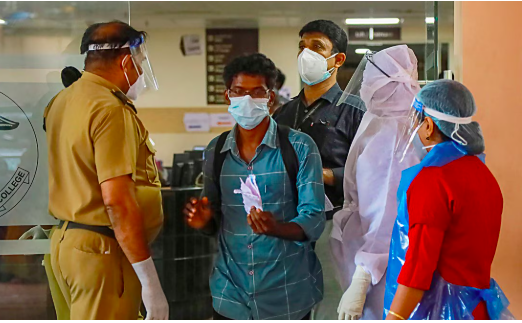
Sri Lanka on Alert as Nipah Virus Cases Emerge in Eastern India—-Sri Lanka has stepped up monitoring measures following reports of a Nipah virus cluster in India’s eastern state of West Bengal.

Health authorities across parts of Asia have also heightened vigilance over the emerging situation, the Daily Mirror reported.

Health officials said Sri Lanka is tracking developments at the regional level and remains in contact with international health monitoring systems.

While no cases have been reported locally, authorities have indicated that preparedness measures are in place should the situation evolve.

The alert follows confirmation by Indian authorities of at least five Nipah virus infections in West Bengal, including cases among healthcare workers.

The development has prompted several countries in the region to strengthen preventive measures, particularly at international airports.

Nipah virus is a zoonotic disease transmitted between animals and humans and, in some instances, through human-to-human contact.

It is classified as a priority pathogen by the World Health Organisation due to its epidemic potential and the severity of illness it can cause. Past outbreaks of the Nipah virus have been associated with high fatality rates, ranging from 40 per cent to 75 per cent. (Xinhua/NAN)

0Shares
Continue Reading

Health & Wellbeing

EL-LAB Limited Marks 2025 World Quality Week With innovation

Published

on

EL-LAB Limited Marks 2025 World Quality Week With innovation

EL-LAB Limited Marks 2025 World Quality Week With innovation


EL-LAB Medical Diagnostics and Research Centre, Nigeria’s leading ISO-certified diagnostic centre, today announced its dedication to global quality standards, marking World Quality Week 2025 with the theme “Quality: Think differently” and highlighting its ISO 15189:2022 accreditation.

The centre, which was established in 1998 (27 years ago), has provided advanced medical testing services across Lagos State and continues to contribute significantly to the development of the Nigerian health sector.

Quality: The Silent Foundation of Clinical Decisions

In a statement issued by the company, Mrs. Blessing Nwakobi, Quality Assurance Manager, emphasized that Quality Assurance is the cornerstone of reliable medical diagnosis.

“In healthcare, laboratories are the silent foundation of clinical decisions. Most medical diagnoses rely on accurate laboratory results, thereby making Quality Assurance fundamental to patient safety and clinical excellence,” Mrs. Nwakobi stated

Through the successful transition to the ISO 15189:2022 standard—the highest international benchmark for medical laboratories—EL-LAB demonstrates its unwavering commitment to excellence, impartiality, and safety. This accreditation ensures that the centre’s quality management system is not merely compliant, but a living culture of competence and continual improvement.

The system is strategically built on principles including:

Patient Centred Services
Risk-Based Thinking
Continuous Improvement

·       Staff engagement, Competence and Training

This risk-based approach ensures that all activities which pose a risk to patients are managed proactively, assuring the best possible outcomes across the entire testing process

The robust quality management strategy integrates comprehensive mechanisms to guarantee the integrity of every result. Quality assurance at EL-LAB involves the strict adherence to Standard Operating Procedures (SOPs), vigorous Internal Quality Control (IQC) checks, and mandatory validation via External Quality Assessment (EQA).

These programs ensure that every test result is accurate, reproducible, reliable, and comparable with global benchmarks, reinforcing reliability and building public trust in every report issued by the laboratory.

Addressing the 2025 Quality Week theme, “Quality: Think differently,” EL-LAB’s leadership urged healthcare professionals to challenge traditional quality approaches.

“We believe thinking differently about quality begins with one powerful shift: seeing quality not as an act, but as an attitude”. “Quality is what we do when no one is watching and it shows in how we treat our patients, our colleagues, and our work. The ISO 15189:2022 accreditation is a reminder that quality is not a destination, but a journey of continuous improvement.”

EL-LAB invites all partners, colleagues, and stakeholders in the healthcare ecosystem to join them in thinking differently, noting that the future of diagnostic excellence depends on embracing change today.

About EL-LAB Medical Diagnostics and Research Centre

Established in 1998, EL-LAB Medical Diagnostics and Research Centre is a leading ISO-certified medical laboratory providing advanced, reliable, and comprehensive diagnostic services across Nigeria. Dedicated to clinical excellence and patient safety, EL-LAB leverages state-of-the-art technology and a highly competent workforce to deliver results that form the trusted foundation of patient care.

0Shares
Continue Reading

Trending

0Shares