Connect with us
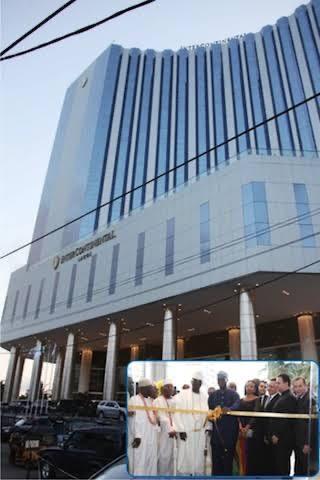
Intercontinental Hotel

JUST IN: Appeal Court Nullifies Sale Of Intercontinental Hotel, Orders Return To Milan Group

More Videos

Published

on

JUST IN: Appeal Court Nullifies Sale Of Intercontinental Hotel, Orders Return To Milan Group—The Court of Appeal Lagos Division has nullified the sale of Intercontinental Hotels, Lagos by Polaris Bank and Asset Management Corporation of Nigeria, and ordered a return of the facility to the original owner, the Milan Industries Ltd.


In a unanimous judgment in suit No CA/LAG/CV/476/2021 delivered by three Justices of the Appeal Court: Jimi Olukayode Bada, who read the lead judgment; Muhammad Ibrahim Sirajo and Peter Oyinkenimiemi Affen, the appellate court ruled that Milan Industries Ltd had fully paid the bank the Two Billion Naira (N2Billion) mortgage facility it secured from Polaris Bank before the hotel was taken over and sold by AMCON and the bank.

The bank, which was then known as Skye Bank had put the management of the five-star hotel under the receivership of Mr. Kunle Ogunba, an arrangement that was nullified by a Federal High Court in Lagos. Despite this, the bank went ahead and sold the hotel to another company, 11 PLC, a move that was challenged at the Appeal Court by the lawyers to Milan Industries Ltd, Messrs Ahmed Raji SAN and Tunde Kasunmu of Prof A.B Kasunmu SAN chambers.

It will be recalled that Milan Industries Ltd had taken a facility from Skye Bank to part finance the five-star hotel located in Victoria Island, Lagos and managed by IHG.

The Milan Group, has up till 2021 to pay back the facility but in a curious move, the bank obtained an interim order to take over the management of the hotel, an order that was vacated when the suit was struck out by the court on March 20th 2018.
According to the Certified True Copy of the judgment signed and released on Wednesday by the Senior Registrar of the court, A. G. Balogun, the appellate court held that the two issues Milan Industries as Appellant/Cross Respondent was contesting were resolved in its favour.

According to the lead judgment by Justice Jimi Bada, “With the resolution of Issues No. 1 and 2 in favour of the Cross Respondent and against the Cross Appellants (Polaris Bank, AMCON and 11 PLC), it is my view that this cross appeal lacks merit and it is hereby dismissed.”
While agreeing with the lead judgment, another member of the appeal court panel, Justice Ibrahim Sirajo stated that “the appellant insisted that it had paid over Two Billion Naira in liquidating the facility and that as at the time the 1st respondent (Polaris Bank) entered into agreement to sell the appellant’s secured asset to the 2nd respondent (AMCON), there was no collaterized and secured asset to sell to the 2nd respondent.

It was also the case of the appellant that at the time the 2nd respondent sold the appellant’s Intercontinental Hotel to the 3rd respondent, the appellant had discharged its obligation under the legal mortgage by paying the amount secured by the property.”

To buttress his position, Justice Sirajo ruled that “I adopt his lordship’s reasoning and conclusion in the leading judgment as mine in also allowing the appeal. I abide by all the orders made in the leading judgment including that of the costs.

”
While also concurring with the lead judgment by Justice Bada, the third member of the appeal panel, Justice Peter Affen said “the judicial reasoning and conclusions reached on the issues raised accord with mine, and I hereby affirm my agreement with the leading judgment which allowed the main appeal and dismissed the cross appeal. I equally abide by the orders on the costs.”

Facebook 0 Twitter 0 LinkedIn WhatsApp 0Shares
Continue Reading
Click to comment

Leave a ReplyCancel reply

Business

UBA, GTCO Lose ₦2.13 billion To Fraudsters Despite Heavy Cybersecurity Investments

Published

on

UBA, GTCO Lose ₦2.13 billion To Fraudsters Despite Heavy Cybersecurity Investments—-Three of Nigeria’s largest financial institutions have reported combined fraud-related losses of approximately ₦2.13 billion in their latest audited financial statements, highlighting the growing threat of cybercrime and electronic banking fraud in the country’s financial sector.

The affected institutions include Access Holdings Plc, Guaranty Trust Holding Company Plc, and United Bank for Africa Plc.

According to details contained in the banks’ 2025 financial reports, fraud incidents linked to the three lenders totalled approximately ₦10.29 billion. However, through recoveries, transaction reversals, and security interventions, the banks were able to prevent or recover about ₦8.16 billion, leaving actual losses at approximately ₦2.13 billion.

Among the banks, Access Holdings recorded the highest direct loss to fraudsters, losing an estimated ₦1.24 billion within the financial year.

United Bank for Africa reported over 26,400 fraud-related incidents, with actual losses totalling approximately ₦621.57 million, while Guaranty Trust Holding Company recorded approximately ₦269.44 million in losses tied to fraudulent activities.

Industry analysts say the figures reflect the increasing sophistication of cybercriminals targeting Nigeria’s rapidly expanding digital banking ecosystem.

Most of the fraud cases were reportedly connected to electronic banking channels, including unauthorised transfers, mobile banking compromise, phishing schemes, identity theft, and other forms of digital payment fraud.

The development comes as Nigerian banks continue to accelerate the country’s transition toward a cashless economy through mobile banking platforms, internet banking services, agency banking networks, and digital payment systems.

Despite the losses, the financial institutions significantly increased investments in technology infrastructure and cybersecurity measures during the year under review.

Collectively, the banks reportedly spent over ₦280 billion on technology upgrades, fraud monitoring systems, customer authentication processes, and transaction security enhancements aimed at reducing cyber threats and protecting customer funds.

Meanwhile, the Central Bank of Nigeria has also intensified regulatory efforts to curb financial fraud across the banking industry.

The apex bank recently introduced stricter compliance measures requiring financial institutions to strengthen fraud detection systems, improve transaction monitoring, and respond more rapidly to suspicious activities and customer complaints.

Financial experts have warned that as digital banking adoption continues to rise across Nigeria, banks and customers alike must remain vigilant against increasingly advanced cybercrime tactics targeting the financial sector

Facebook 0 Twitter 0 LinkedIn WhatsApp 0Shares
Continue Reading

Breaking

BREAKING: Dangote Refinery Hikes Petrol And Diesel Prices Amid Economic Strain

Published

on

BREAKING: Dangote Refinery Hikes Petrol And Diesel Prices Amid Economic Strain—-Dangote Petroleum Refinery has revised its ex-depot prices, increasing the gantry price of Premium Motor Spirit (PMS), or petrol, to ₦1,175 per litre, while Automotive Gas Oil (AGO), commonly known as diesel, has been raised to ₦1,620 per litre.

The latest revision marks the fourth consecutive price review in less than two weeks amid global market volatility, according to a report by Petroleumprice.ng.

Quoting industry sources, the report noted that the new pricing template has been communicated to marketers, following earlier adjustments this month.

Under the revised structure, the ₦1,175 per litre petrol price reflects a significant jump from the previous ₦995 per litre, while diesel has surged sharply from its prior ₦1,430 per litre level, underlining the continued upward trend in domestic fuel pricing.

The development is likely to have a ripple effect across Nigeria’s downstream petroleum market, as depot operators and fuel marketers adjust supply costs in response to the revised prices announced by the country’s largest refining facility.

The refinery had yet to issue an official statement on the development as of the time of filing this report.

Oil prices soared 30 per cent today on fears about supplies from the Middle East, as the US-Israeli war against Iran continued into a second week with no sign of letting up.

Fears grew that the Middle East conflict could last for some time after US President Donald Trump said only the “unconditional surrender” of Iran would end the war.

He added at the weekend that the spike in prices was a “small price to pay” to eliminate Iran’s nuclear threat, reiterating the White House’s insistence that the rise is temporary.

Since the beginning of the war, WTI is up more than 75 per cent and Brent more than 60 per cent.

Attacks on oilfields were reported in southern Iraq and in the northern autonomous Kurdistan region, which forced a US-run oilfield to cease production, while the United Arab Emirates and Kuwait have started reducing output.

That came with maritime traffic in the Strait of Hormuz — through which a fifth of global crude and gas passes — halted since the war began on February 28.

Facebook 0 Twitter 0 LinkedIn WhatsApp 0Shares
Continue Reading

Trending

Facebook 0 Twitter 0 LinkedIn WhatsApp 0Shares