Two Injured Ukrainian Soldiers Running London Marathon For Their War-Torn Homeland—-Two injured Ukrainian marines are taking on the TCS London Marathon for their war-torn homeland — and will return to active duty afterwards.
Heorhii ‘Gosha’ Roshka and Oleksii Rudenko have refused to be sidelined after losing limbs in the fight against Russian military aggression since 2014.
The 42km run in London will be the servicemen’s first marathon, with Mr Rudenko telling the PA news agency: “We are very eager to start. We’re ready and we’re not afraid.”
“I want as many people as possible to see that Ukrainians can beat the marathon even without limbs and that we are unbreakable and unstoppable,” he added.
Mr Roshka joined the Ukrainian army in 2017 after Russia occupied Crimea.
In May 2022, he took up a combat position in the Azovstal steel plant, the heart of a pocket of resistance in the then-besieged city of Mariupol, which is now under Russian occupation.
After being hit by a mine, he retreated to a bunker in the steel plant where his arm was amputated.
Less than two weeks later he was forced to surrender and was taken captive along with his comrades.
Mr Roshka said he is “still very emotional” about the atmosphere inside the steel plant.
“People were in a very bad situation so we were just waiting there for the final moment of our life because no-one thought there was going to be survival,” he said.
“Some people decided it was going to be maybe easier to shoot themselves because it was a desperate situation.”
Mr Roshka was held captive with his fellow Ukrainian soldiers in a hospital in Donetsk for a month-and-a-half before he was eventually freed as part of a prisoner swap.
He said: “I lost a lot of blood so I didn’t really care at the moment we were taken captive. I felt really, really bad and I didn’t really care what happened next.
“During captivity itself, it was really hard. We were humiliated both physically and mentally. We were hit and verbally abused.
“When the arm was amputated in Azovstal the conditions were really bad and I couldn’t properly treat it there and in captivity I didn’t get good healthcare so the arm started to rot.”
Mr Roshka was initially suspicious when placed on a bus driving to Ukraine but when he realised he was being freed, he felt “happiness”.
“We started to have faith and then once we saw the Ukrainian flag, almost everyone started crying and we were really happy,” he said.
Mr Roshka went through “a hard path of recovery, prosthetics, and rehabilitation” in Ukraine before returning to military service.
On running the London Marathon, he said: “This is not only a test of my character, but also an opportunity for me to support my fellow brothers who were seriously wounded.”
Mr Rudenko, who had to leave the interview early after air raid sirens rang out in Odesa, joined the Ukrainian army in 2020 and held a position in Donetsk for six months before stepping on a mine during a combat mission and losing his leg.
“We were walking through a forest and we de-mined three mines but the fourth mine was hidden under the ground. It wasn’t visible so I stood on it,” he told PA.
“Then after the explosion I saw that my leg was gone so I quickly applied a tourniquet and we decided to fall back.”
Mr Rudenko, now an army instructor, continued: “I was taken to Kyiv first and underwent nine operations and when I spoke to the doctor I asked them if I could run after the amputation.
“The doctor said that in order to run, I would need a sports prosthetic so to do that they needed to cut the upper leg so this is why I had another operation to cut the leg even more.”
After undergoing nine operations, it took Mr Rudenko five months to fully adapt to his prosthetic leg.
He said: “The first couple of weeks you have to walk 12 minutes a day on prosthetics but I didn’t care and I walked two or three hours. You really need to move. If you move a lot, it’s easier to adapt.”
The servicemen are raising money for two injured Ukrainian soldiers through the Citizen Charity Foundation.
Mr Rudenko concluded: “I am running 2024 London Marathon to support as many seriously injured fellow brothers with amputations as possible.
“My goal is to spread awareness and raise funds for seriously injured Ukrainian servicemen who have lost limbs.”
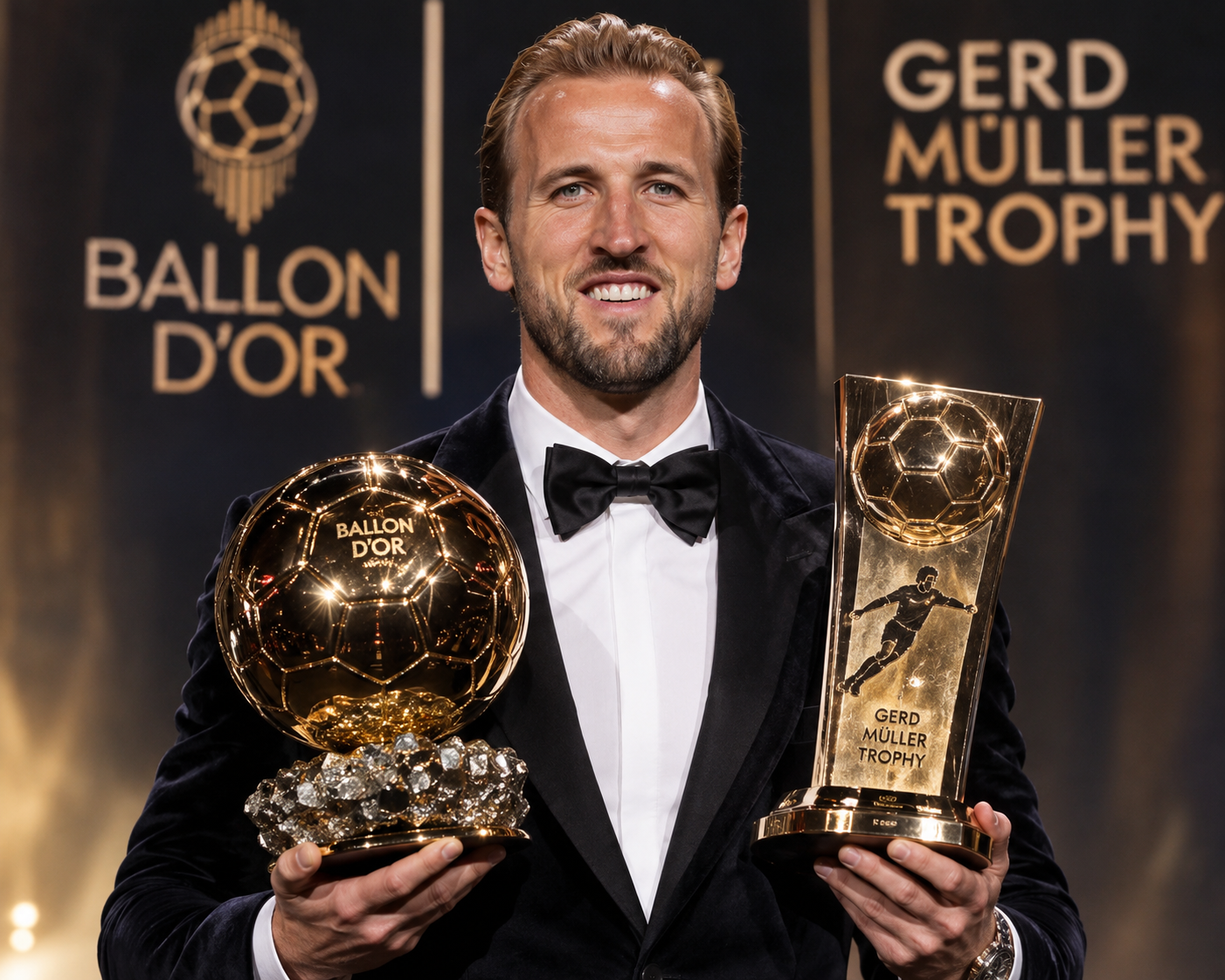
BREAKING: Kane Completes Historic Ballon d’Or and Gerd Müller Trophy Double—-Harry Kane added another remarkable achievement to his historic night by winning the 2026 Gerd Müller Trophy alongside the Men’s Ballon d’Or, becoming the first player to claim both honours in the same year.
The Gerd Müller Trophy recognises the season’s leading goalscorer, making it a fitting addition to Kane’s Ballon d’Or triumph after a prolific 2025/26 campaign for Bayern Munich and England.
The England captain reportedly scored 73 goals in 65 appearances across club and international football, underlining the extraordinary scoring form that helped propel him to the top of the individual honours.
Kane’s double recognition highlights two distinct aspects of his season: his overall performances, rewarded by the Ballon d’Or, and his outstanding goalscoring output, recognised by the Gerd Müller Trophy.
It also adds to the significance of a night in which Kane ended England’s 25-year wait for a Ballon d’Or winner and became Bayern Munich’s first recipient since Karl-Heinz Rummenigge in 1981.
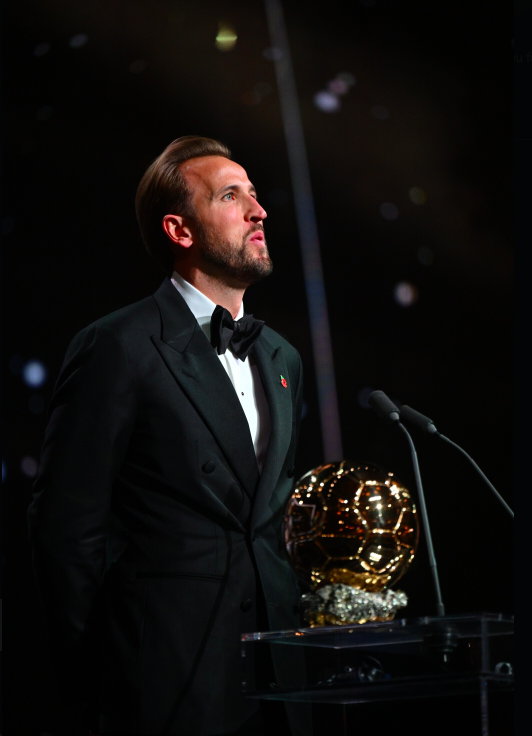
Harry Kane has been crowned the 2026 Men’s Ballon d’Or winner, capping a remarkable season with Bayern Munich and England to secure the biggest individual honour of his career.
The 33-year-old striker was announced as the winner at Monday’s ceremony in London on October 26, beating a competitive field featuring Barcelona’s Lamine Yamal, Real Madrid’s Kylian Mbappé and eight-time winner Lionel Messi.
Kane’s triumph represents a historic moment for both English and German football, ending two lengthy waits for the prestigious award. He becomes the first Englishman to win the Ballon d’Or since Michael Owen in 2001 and the first Bayern Munich player to claim it since Rummenigge in 1981.
Kane’s Extraordinary Season Seals Ballon d’Or Glory
Kane’s award follows a prolific 2025/26 campaign in which he recorded 73 goals in 65 appearances for club and country, underlining his status as one of the world’s most effective attacking players.
His performances were central to Bayern Munich’s domestic success, as the German giants retained the Bundesliga title and continued their pursuit of silverware across competitions.
Beyond his goalscoring numbers, Kane’s movement, finishing, link-up play and leadership made him a crucial figure for Bayern, helping the England captain strengthen his case for football’s most coveted individual prize.
First Bayern Winner Since Karl-Heinz Rummenigge
Kane’s victory ends Bayern Munich’s 45-year wait for a Ballon d’Or winner.
The club’s previous recipient was Rummenigge, who claimed the award in consecutive years in 1980 and 1981 during his distinguished playing career.
Kane now joins an exclusive group of Bayern legends to have won the honour, alongside Rummenigge, Gerd Müller and Franz Beckenbauer.
The achievement further strengthens Kane’s legacy in Munich after his move from Tottenham Hotspur in 2023, when he arrived in Germany determined to compete for major trophies and elevate his career to another level.
Kane Ends England’s 25-Year Wait
For English football, Kane’s victory ends a quarter-century drought that stretches back to Owen’s triumph in 2001.
Owen won the award following an outstanding year with Liverpool, during which he helped the club secure five trophies, including the FA Cup, League Cup and UEFA Cup.
Kane now becomes the fifth Englishman to win the men’s Ballon d’Or, following Sir Stanley Matthews, Sir Bobby Charlton, Kevin Keegan and Owen. His success places him among the most celebrated English players in the history of the sport.
A Landmark Achievement for England’s Captain
Kane’s success also reflects his continued importance to the England national team. His goalscoring form for club and country helped strengthen his position among the leading contenders during a season in which individual performances and international achievements carried significant weight.
After years of prolific scoring in the Premier League with Tottenham, Kane’s move to Bayern has brought further team success and now the individual recognition that had eluded him.
The Ballon d’Or represents another milestone for a striker whose career has been defined by consistency, professionalism and an exceptional ability to find the net.
Kane Takes His Place Among Football’s Elite
Winning the Ballon d’Or places Kane among a select group of footballers to have received the award, which has recognised the game’s outstanding individual performers since 1956.
His victory is particularly significant because it brings an end to two historic droughts: England’s wait since 2001 and Bayern Munich’s since 1981.
For Kane, the achievement crowns a remarkable campaign and adds a defining chapter to his career. For Bayern and English football, it marks a long-awaited return to the top of the Ballon d’Or podium.






 Trending News4 years ago

 News4 years ago

 News4 years ago

 News4 years ago

 Politics3 years ago

 Politics4 years ago

 News4 years ago

 Health & Wellbeing2 years ago

